As Russia’s full-scale war against Ukraine continues its fourth year, recovery and reconstruction efforts have begun to take shape. Yet the vision guiding these efforts often overlooks the gendered realities of displacement, integration, and return. Despite repeated references to “equality” and “inclusion” in government strategies, policies remain largely disconnected from the lived experiences of women, LGBTQ+ people, and other marginalised groups, both within Ukraine and among the millions who fled abroad. The disconnect is not only a matter of policy design but also of political will, coordination, and recognition of who gets to participate in shaping Ukraine’s postwar future.
Category: Ukrainian Politics
Perspectiva feminista sobre la guerra de Rusia en Ucrania – entrevista con OrienteMedio
A las organizaciones feministas ucranianas no les faltan temas que abordar, empezando por la pobreza feminizada, destrucción de hospitales, escuelas y guarderías, desplazamientos forzosos, violencia de género (incluidas las violaciones en tiempos de guerra) hasta los derechos de las mujeres en el ejército – de esto y muchas cosas mas, incluso mi ultimo libro, en la entrevista al OrienteMedio
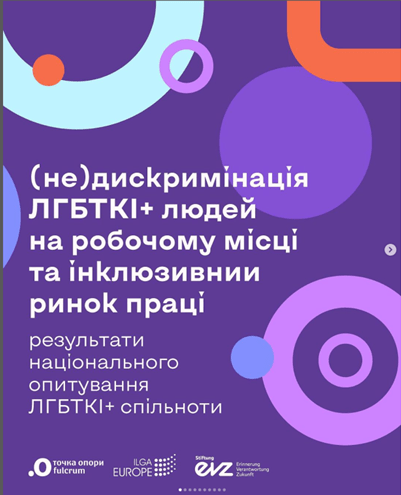
(non)discrimination of LGBTQI+ people in the workplace and inclusive labor market
(non)discrimination of LGBTQI+ people in the workplace and inclusive labor market results of a national survey of the LGBTQI+ community

In 2015, the Verkhovna Rada of Ukraine voted for the amendment to the
Labor Code of Ukraine that prohibited discrimination of people in the
workplace based on their sexual orientation and/or gender identity. By
2023, there was not a single case in Ukraine submitted to the court in
relation to workplace discrimination based on SOGI. At the same time,
although recent sociological data shows a general improvement in
societal attitudes toward LGBTQ people , LGBTQ people remain one of
the most marginalized minority groups in Ukraine, and the full-scale
invasion has exacerbated their vulnerability. Based on this premise and
on the fact that there has been no research, and no data was collected
on LGBTQ people in the Ukrainian job market. Therefore, the present
report is the first attempt to shed some light on the situation of
Ukrainian LGBTQ people in various sectors of economy. The purpose of
the report was to highlight the main challenges and obstacles that
Ukrainian LGBTQ individuals face in job searches and workplaces.
Designed as a qualitative study and primarily based on in-depth one-toone interviews with LGBTQ Ukrainians, the report has its limitations in
terms of representativeness of the sampling regarding participants’age,
place of residency, and employment sector. Nevertheless, it can serve as
a solid starting point and give a good idea of the issues that need to be
dealt with to make Ukrainian private and public sectors of economy
more inclusive.
The participation of LGBTQ+ people in the war effort cannot be ignored
Interview for the Forum for Ukrainian Studies
Ostap Kushnir: In your opinion, what major gender-based challenges in social and political life has Ukraine faced, resolved, or failed to resolve since the beginning of the war in 2014?
Maryna Shevstova: When it comes to legislation, Ukraine has been on the right path and demonstrated good progress. This has happened not without the help of its Western partners. Immediately after Euromaidan in 2014, Ukraine reoriented itself toward integration with the European Union, which was accompanied by technical, economical, financial, political, and other kinds of support from the outside. This also additionally empowered civil society, activists, and individual MPs to push forward for further updates.
One call or message can change someone’s destiny or give them hope
An interview with Ukrainian MSCA postdoctoral fellow Maryna Shevtsova.

An interview with MSCA Portal, full version available here
Do wars have a sexual orientation? On the Russian invasion, LGBTQ rights and civil society resistance in Ukraine
This piece, I wrote for Feministeerium, aims to prove the legitimacy of those concerns by offering a brief reflection on how this war affected the Ukrainian LGBTQ community.

Podcast: Resisting Russian propaganda: on nationalism in Ukraine
According to the Russian government, the goal of invading Ukraine was to “denazify” the country and its leadership and “to protect people” who have been “subjected to bullying and genocide». The trope of Ukraine «nazification» has been enormously highlighted and elaborated within the official Russian discourse since 2014. Since the Crimea annexation and the war in Donbass, the Russian state-linked mass media has been promoting discussions on the rise of nationalism and nationalistic movements in Ukraine portrayed as a threat to the Russian-speaking population of Ukraine.
The current podcast is aimed at dismantling the Russian propaganda’s trope of Ukraine «nazification». Postdoctoral researcher Anna Avdeeva (Swedish School of Social Science) discusses the nationalism in Ukraine, understood widely, together with the Ukrainian scholar Dr. Maryna Shevtsova, Postdoctoral researcher at University of Ljubljana (Slovenia), and Senior FWO Fellow at KU Leuven (Belgium). The podcast continues the series of the discussion on the war in Ukraine.
School as a Battlefield: The Debate on Sexuality Education in Ukraine

Sex Education, a three-season Netflix series in which the teenage son of a sex therapist mother sets up an underground sex therapy clinic at his school, has been a resounding hit among audiences of various age groups across the globe, and Ukraine is no exception. Ukrainian teenagers and many of their parents seemed to appreciate following the on-screen adventures of diverse characters dealing with their sexuality, sexual orientation, gender identity, teenage pregnancies, STDs, gender-based violence, female orgasms, coming outs, asexuality, sex lives of people with disabilities, and so on. While the characters’ problems were avidly discussed by viewers of different ages on social media, would it be realistic to expect an open discussion of the above-mentioned topics in a typical Ukrainian classroom?
Covid-19 Pandemic Case Study: Ukraine
My report on COVID-19 situation in Ukraine for Heinrich Boell Stiftung, Brussels

The first Covid-19 case was detected in Ukraine on 3 March in the western oblast of Chernivtsi. As of the end of August, almost 115,000 cases had been confirmed, including some 2,500 deaths. The primary sources of the initial outbreak were Ukrainians returning home from work and tourist trips from abroad.
Struggling through COVID 19: challenges Ukrainian LGBTQ people face during the pandemic
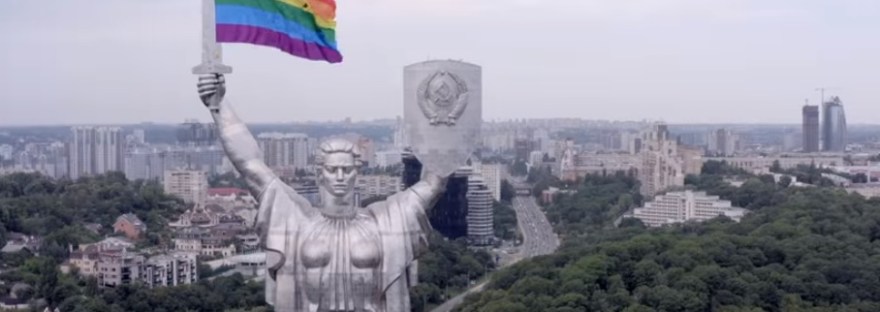
On June 21, 2020, a Ukrainian NGO KyivPride, that for several years already has been the main organizer of the Pride week and Equality march in Kyiv, posted a video in which a drone carrying a large rainbow flag flew over various districts of the Ukrainian capital. The flag ended up placed on top of the Motherland Monument, a Soviet-era war memorial in Kyiv. The monument is a large steel statue of a symbolic mother holding a sword and shield. The drone flew in front of the sword so that on the video, it looked as if the mother was waving a flag.
As in many places across the world, Pride month in Ukraine was moved to an online format forcing the organizing committee to be extremely creative. For more than a week, Ukrainian activists hosted zoom-conferences and interview marathons as Ukrainian cities were under strict COVID 19 lockdown. Despite screen fatigue, online events had quite decent attendance. As everybody was talking from the comfort of their own rooms and flats, it was the first time that none of the Pride Month events were disrupted by conservative right-wing groups’. The safety and accessibility of online meetings also allowed for the participation of people who could not make it previously due to health conditions or not being able to afford it. For example, a Ukraine-based NGO I am working with, Parents’ Initiative TERGO, for the first time in seven years of its existence hosted a series of online meetings of parents of LGBTQ people. Bringing together parents and activists from Ukraine, Russia, Belarus, Moldova, Kyrgyzstan, Latvia, and Lithuania. Of course, in theory, it could have been done before COVID, too. Still, it took a pandemic to push people to finally overcome their fear of technology and learn how to use online communication tools.