Civil society, Feminist perspectives, LGBTQ rights

Policy Brief. Queering Displacement: The State of the Ukrainian LGBTQ+ Community During the Russian Full-Scale Invasion (For GPPI)

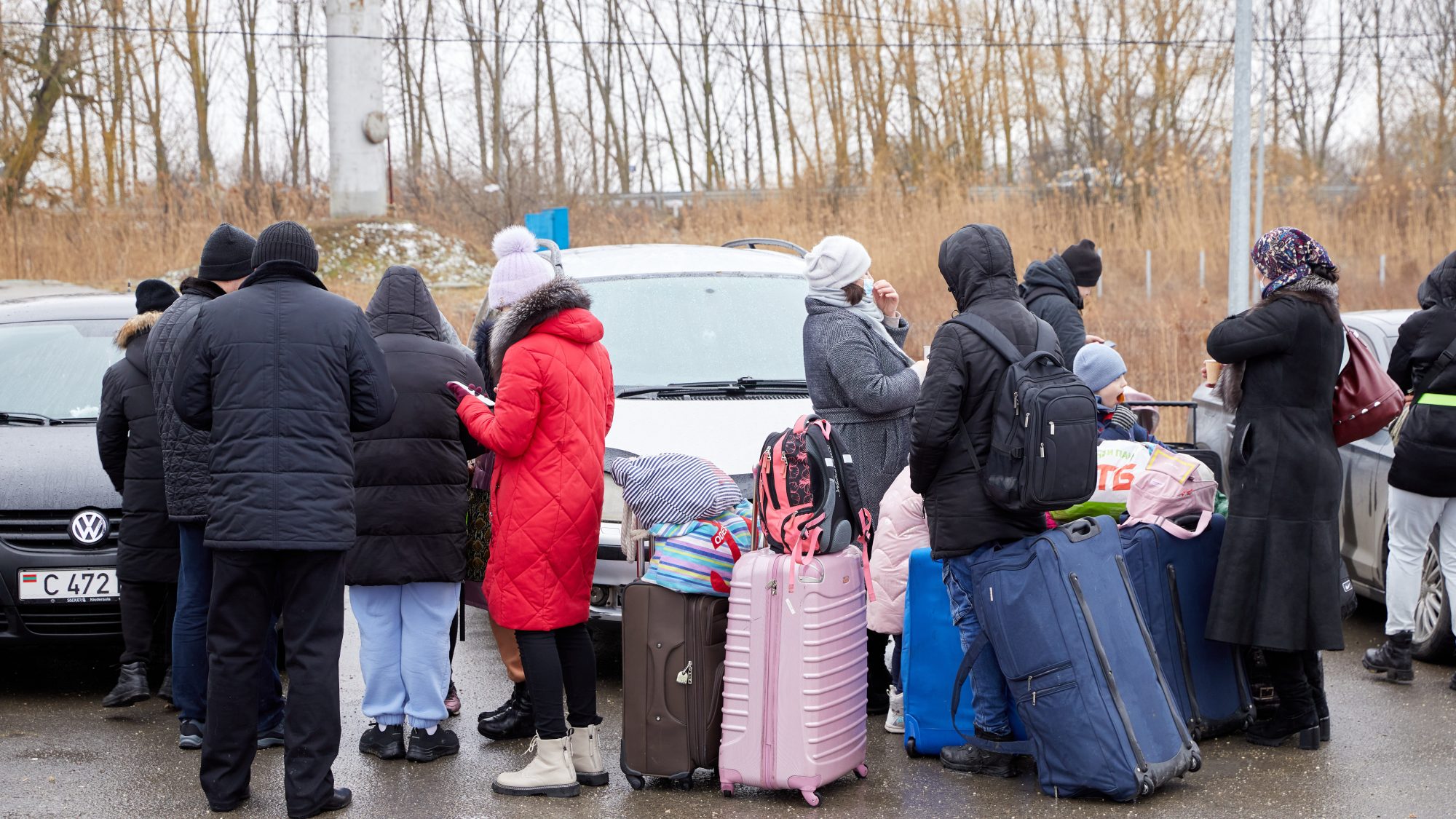
A scene from the Palanca-Maiaki-Udobnoe border crossing point, between the Republic of Moldova and Ukraine, on March 1, 2022, as people fled Russia’s military offensive  | Photo: UN Women/Aurel Obreja/Flickr; CC BY-NC-ND 2.0

Russia’s full-scale invasion of Ukraine has had a drastic impact on the lives of internally displaced people (IDPs). But one subgroup of these Ukrainians is particularly vulnerable: IDPs who identify as LGBTQ+.  I prepared the following brief in English and Ukrainian for the Global Public Policy Institute.

LGBTQ rights, Ukrainian Politics

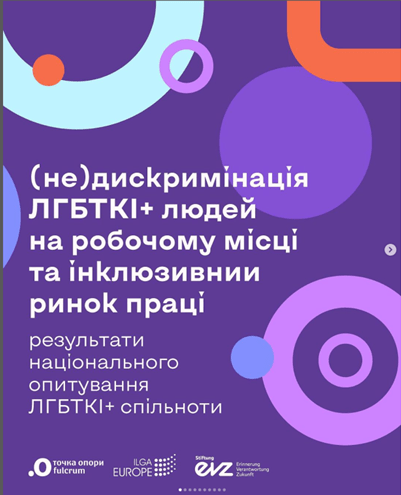
(non)discrimination 
of LGBTQI+ people 
in the workplace and inclusive labor market

(non)discrimination 
of LGBTQI+ people 
in the workplace and inclusive labor market results of a national survey of the LGBTQI+ community

In 2015, the Verkhovna Rada of Ukraine voted for the amendment to the
Labor Code of Ukraine that prohibited discrimination of people in the
workplace based on their sexual orientation and/or gender identity. By
2023, there was not a single case in Ukraine submitted to the court in
relation to workplace discrimination based on SOGI. At the same time,
although recent sociological data shows a general improvement in
societal attitudes toward LGBTQ people , LGBTQ people remain one of
the most marginalized minority groups in Ukraine, and the full-scale
invasion has exacerbated their vulnerability. Based on this premise and
on the fact that there has been no research, and no data was collected
on LGBTQ people in the Ukrainian job market. Therefore, the present
report is the first attempt to shed some light on the situation of
Ukrainian LGBTQ people in various sectors of economy. The purpose of
the report was to highlight the main challenges and obstacles that
Ukrainian LGBTQ individuals face in job searches and workplaces.
Designed as a qualitative study and primarily based on in-depth one-toone interviews with LGBTQ Ukrainians, the report has its limitations in
terms of representativeness of the sampling regarding participants’age,
place of residency, and employment sector. Nevertheless, it can serve as
a solid starting point and give a good idea of the issues that need to be
dealt with to make Ukrainian private and public sectors of economy
more inclusive.

See the full text of the report commissioned by Fulcrum UA

LGBTQ rights

LGBTQI+ Refugees from Ukraine in EU countries: Challenges and Needs – June 2023, for Gender Stream

photo by Olha Poliakova, Gender Stream NGO

About the challenges and problems, the experience of crossing the border, integration and socialization in new conditions and the desire to return to Ukraine — Maryna Shevtsova on the request of the public organization “Gender Stream” and with the generous support of FLAX Foundation conducted the world’s first study of the situation of LGBTQI+ Ukrainians abroad.

According to the results of the study, the main problems of LGBTQI+ refugees in host countries are related to:

  • Searching for affordable and safe housing 
  • Access to friendly medical care 
  • A language barrier that prevents access to the labor market or limits opportunities for employment and socialization.

SEE THE SHORT VERSION OF THE RESEARCH

The research was conducted using in-depth offline and online interviews from December 2022 to May 2023. 34 participants who at the time of the study lived in Austria, Bulgaria, the Czech Republic, Germany, Poland, Romania and Slovakia took part in the survey.

The main researcher was Maryna Shevtsova, candidate of economic sciences, PhD in political science. The study was prepared by the NGO “GENDER STREAM” on the initiative, as well as technical and organizational support of LabLGBTQI_UA and with the financial support of VOICE.

Interview questions covered the following areas:

  • Choice of destination country
  • Border crossing experience
  • Search for housing and work
  • Experience of integration and language courses
  • Experience working with medical and social services. 

Additional attention was paid to socialization, general psychological well-being and connections with local public organizations protecting the rights of LGBTQI+. At the end of the interview, respondents were asked about their future and improvements important for a possible return to Ukraine.

The LGBTQI+ community may experience additional, unique challenges and threats during full-scale war. Studying their experience allows us to identify special needs and problems faced by Ukrainian resettled women and men during relocation and seeking shelter in other countries. In the long run, this will allow for the development of more effective mechanisms for the protection and support of these people in their new places of residence. As a result, it will contribute to the creation of a more empathetic society, reduce stigmatization and discrimination of the LGBTQI community and ensure safety, protection and equal opportunities for its members.

Civil society, Feminist perspectives, LGBTQ rights, Ukrainian Politics

The participation of LGBTQ+ people in the war effort cannot be ignored

Interview for the Forum for Ukrainian Studies

Ostap Kushnir: In your opinion, what major gender-based challenges in social and political life has Ukraine faced, resolved, or failed to resolve since the beginning of the war in 2014?

Maryna Shevstova: When it comes to legislation, Ukraine has been on the right path and demonstrated good progress. This has happened not without the help of its Western partners. Immediately after Euromaidan in 2014, Ukraine reoriented itself toward integration with the European Union, which was accompanied by technical, economical, financial, political, and other kinds of support from the outside. This also additionally empowered civil society, activists, and individual MPs to push forward for further updates.

Read more…

Civil society, Feminist perspectives, LGBTQ rights, Ukrainian Politics

School as a Battlefield: The Debate on Sexuality Education in Ukraine

Sex Education, a three-season Netflix series in which the teenage son of a sex therapist mother sets up an underground sex therapy clinic at his school, has been a resounding hit among audiences of various age groups across the globe, and Ukraine is no exception. Ukrainian teenagers and many of their parents seemed to appreciate following the on-screen adventures of diverse characters dealing with their sexuality, sexual orientation, gender identity, teenage pregnancies, STDs, gender-based violence, female orgasms, coming outs, asexuality, sex lives of people with disabilities, and so on. While the characters’ problems were avidly discussed by viewers of different ages on social media, would it be realistic to expect an open discussion of the above-mentioned topics in a typical Ukrainian classroom?

Read more…

Civil society, Feminist perspectives, LGBTQ rights, Ukrainian Politics

Covid-19 Pandemic Case Study: Ukraine

My report on COVID-19 situation in Ukraine for Heinrich Boell Stiftung, Brussels

 Covid-19 Pandemic Case Study - Ukraine

The first Covid-19 case was detected in Ukraine on 3 March in the western oblast of Chernivtsi. As of the end of August, almost 115,000 cases had been confirmed, including some 2,500 deaths. The primary sources of the initial outbreak were Ukrainians returning home from work and tourist trips from abroad.

Read more here

Feminist perspectives, LGBTQ rights, Ukrainian Politics

Struggling through COVID 19: challenges Ukrainian LGBTQ people face during the pandemic

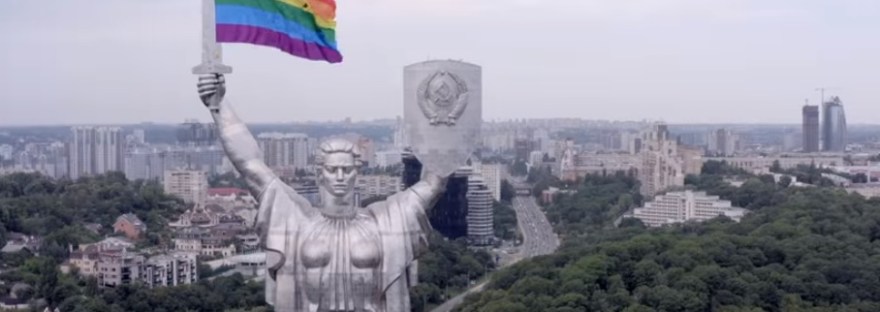
On June 21, 2020, a Ukrainian NGO KyivPride, that for several years already has been the main organizer of the Pride week and Equality march in Kyiv, posted a video in which a drone carrying a large rainbow flag flew over various districts of the Ukrainian capital. The flag ended up placed on top of the Motherland Monument, a Soviet-era war memorial in Kyiv. The monument is a large steel statue of a symbolic mother holding a sword and shield. The drone flew in front of the sword so that on the video, it looked as if the mother was waving a flag.

As in many places across the world, Pride month in Ukraine was moved to an online format forcing the organizing committee to be extremely creative. For more than a week, Ukrainian activists hosted zoom-conferences and interview marathons as Ukrainian cities were under strict COVID 19 lockdown. Despite screen fatigue, online events had quite decent attendance. As everybody was talking from the comfort of their own rooms and flats, it was the first time that none of the Pride Month events were disrupted by conservative right-wing groups’. The safety and accessibility of online meetings also allowed for the participation of people who could not make it previously due to health conditions or not being able to afford it. For example, a Ukraine-based NGO I am working with, Parents’ Initiative TERGO, for the first time in seven years of its existence hosted a series of online meetings of parents of LGBTQ people. Bringing together parents and activists from Ukraine, Russia, Belarus, Moldova, Kyrgyzstan, Latvia, and Lithuania. Of course, in theory, it could have been done before COVID, too. Still, it took a pandemic to push people to finally overcome their fear of technology and learn how to use online communication tools.

Read more