In 2013 I returned to Ukraine from Budapest, Hungary with an MA in Gender studies – not surprisingly it sounded strange to my friends and parents as it did not seem to make me very employable. A month of fruitless job searching made me desperate enough to pay an entrance ticket to a job fair in Kyiv, where I was given an actual newspaper full of job announcements – something I had completely forgotten about in the era of the Internet. Out of curiosity, I looked through it. I stumbled upon a two-pages full of ads promising USD 9 000,00 to women under thirty who already had at least one child and were ready to work as surrogate mothers (as a comparison, an average monthly salary in Ukraine was around 300-400 US Dollars at that time). That was when I found out that surrogacy was a legal practice in Ukraine. As the recent reaction of numerous Ukrainians in social media and on news forums demonstrated, this was news to them too, even though, for the past two decades, Ukraine had already been a popular destination for thousands of foreign couples unable to conceive a child.
Author: marynashevtsova3525
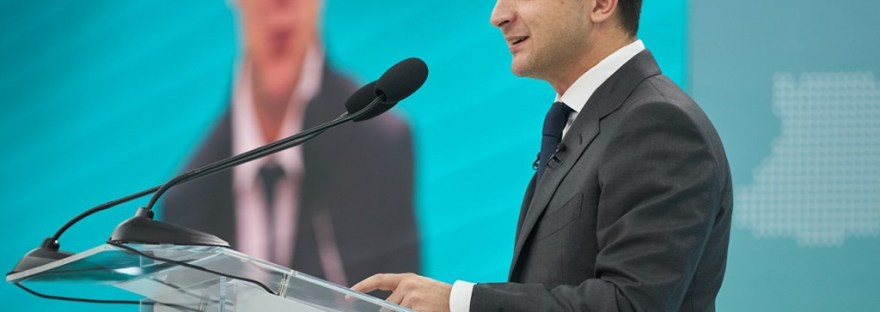
Ukraine’s Civil Society and Zelensky: A Romantic Affair or Guest Marriage?
Before his unexpected victory in Ukraine’s presidential elections, the comedian and political novice Volodymyr Zelensky’s engagement with civil society was almost non-existent. The last two years of former president Petro Poroshenko were marked for civil society organizations (CSO) – in particular those working on human rights, anti-corruption, and media freedom – by numerous obstacles, including physical threats, legal measures, and fake news campaigns. It is not surprising, therefore, that having a new, enigmatic figure in power aroused numerous concerns and anxieties among civil activists. One year after Zelenky’s inauguration, it is time to see if those concerns were justified.
Fighting Gayropa – CES Lunchtime Symposium
Fighting Gayropa – on LGBTI rights and state homophobia in Ukraine
Against the backdrop of the conflict with Russia and growing approximation with the European Union (EU), the LGBTI movement in Ukraine seemed to have achieved some of its political goals, such as introducing changes in legislation and holding peaceful equality marches in Kyiv. At the same time, the last decade has seen a growing number of homophobic attacks by right-wing groups across the country, while sociological surveys have shown an increased level of homophobic attitudes. The article questions the factors that caused the mentioned outcomes and examines the role that the EU, Russia, and national stakeholders played in these transformations.