Civil society, Feminist perspectives

Ukrainian feminist activist Maryna Shevtsova: All women’s rights organisations have switched to emergency mode

My interview for Feministeerium

What has the war meant for women? Hille Hanso talked to Maryna Shevtsova, a Ukrainian scholar, feminist and activist, about the history of the feminist movement in Ukraine, the developments in women’s and minorities’ political rights in Ukraine before the war, about the views on surrogacy and the impact of the war. Their conversation began in the autumn and ended when Russia had attacked Ukraine and the normal functioning of society ceased abruptly.

Read full text

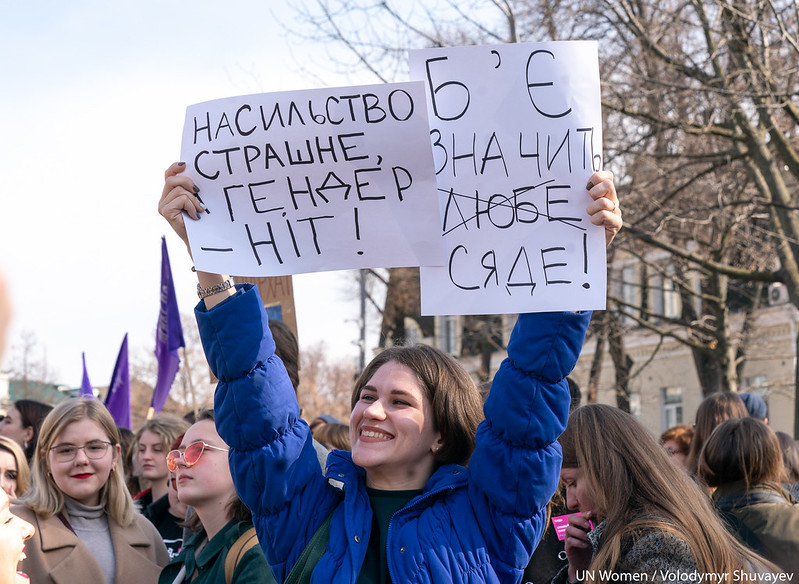
Women’s March in Ukraine 2019. Creative Commons: UN Women/Volodymyr Shuvayev
Civil society, Feminist perspectives, LGBTQ rights, Ukrainian Politics

School as a Battlefield: The Debate on Sexuality Education in Ukraine

Sex Education, a three-season Netflix series in which the teenage son of a sex therapist mother sets up an underground sex therapy clinic at his school, has been a resounding hit among audiences of various age groups across the globe, and Ukraine is no exception. Ukrainian teenagers and many of their parents seemed to appreciate following the on-screen adventures of diverse characters dealing with their sexuality, sexual orientation, gender identity, teenage pregnancies, STDs, gender-based violence, female orgasms, coming outs, asexuality, sex lives of people with disabilities, and so on. While the characters’ problems were avidly discussed by viewers of different ages on social media, would it be realistic to expect an open discussion of the above-mentioned topics in a typical Ukrainian classroom?

Read more…

Civil society

Democracy Quarantined? Authoritarian Regimes and Protests During the Pandemic

(For ISPI (Italian Institute for International Political Studies))

It seems that not only the economy and health care systems, but also human rights and democracy have proven particularly fragile during the Covid-19 pandemic. Even in more consolidated democracies, governments did not always succeed in ensuring that all the restrictions were necessary and proportionate to the threat to the lives of their citizens. According to the Freedom House report, the condition of democracy and human rights has grown worse in more than 80 countries. As the vaccination campaign is advancing worldwide, although in a patchy way, civil society organizations and activists in countries led by authoritarian regimes face new challenges of coping with the consequences of the accelerated illiberal agenda of their countries’ leaders. During the last one and a half years, one could observe how authoritarian leaders introduced excessive control and surveillance, discriminatory restrictions on freedom of assembly, movement, and speech, often enforced by police or the military. In this regard, this article looks at the strategies that authorities in Russia, Belarus, and Turkey have chosen to use the crisis to deal with civil society activism and strengthen their own position.

Feminist perspectives

Iceland – the country, where feminism has won?

(In Ukrainian)

Уже кілька років поспіль Ісландія посідає топові місця у світових рейтингах гендерної рівности. Західні видання, як-от «Форбс» і «Економіст», постійно згадують цю невелику північну країну як приклад, який повинні наслідувати всі розвинуті демократичні держави. Майже десяток років як в Ісландії найменший розрив у зарплаті між жінками й чоловіками і ця країна — світовий лідер із залучення жінок як робочої сили: частка жінок, які працюють, 2017 року сягнула 80 %. У правліннях великих компаній жінки займають майже половину посад, це результат запровадженої 2013 року обов’язкової гендерної квоти у 40 %. Країна також надзвичайно дружня до ЛГБТІК-спільноти: з 2010 року тут узаконено одностатеві шлюби, одностатеві пари можуть удочеряти і всиновлювати дітей та користуватися послугами штучного запліднення, а для людей з інтерсекс-варіаціями з 2020 року є опція обрати стать «Х» у документах. Інакше кажучи, Ісландія з населенням трошки менше як 320 тисяч осіб принаймні зовні схожа на країну, де фемінізм, толерантність і права людини таки перемогли. Чи справді це так і як ісландським жінкам вдалося те, про що в інших частинах світу можна лише мріяти, спробуймо розібратися в цій статті.

Civil society, Feminist perspectives, LGBTQ rights, Ukrainian Politics

Covid-19 Pandemic Case Study: Ukraine

My report on COVID-19 situation in Ukraine for Heinrich Boell Stiftung, Brussels

 Covid-19 Pandemic Case Study - Ukraine

The first Covid-19 case was detected in Ukraine on 3 March in the western oblast of Chernivtsi. As of the end of August, almost 115,000 cases had been confirmed, including some 2,500 deaths. The primary sources of the initial outbreak were Ukrainians returning home from work and tourist trips from abroad.

Read more here

Uncategorized

На захисті прав жінок? Фемінізм, правий популізм і націоналізм у сучасній політичній риториці

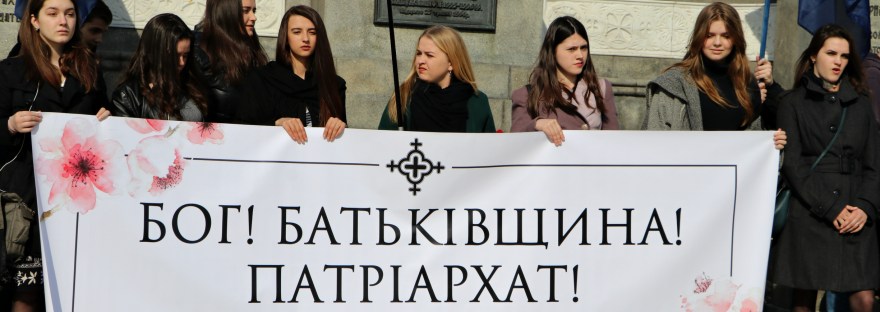
Останні кілька років праворадикальні й націоналістичні рухи в Україні у багатьох асоціюються з перешкоджанням мирним зібранням і заходам, які стосуються феміністичних ініціатив або прав ЛГБТ-людей. У медіа регулярно з’являються повідомлення про напади на учасниць маршів за права жінок та ЛГБТ-активістів. Для українського контексту звично пов’язувати правонаціоналістичну ідеологію з так званими традиційними християнськими або традиційними сімейними цінностями, що автоматично означає проти фемінізму, гендерної рівности й поваги до прав ЛГБТ-людей. Саме праві угруповання — найактивніші противники ратифікації Україною Стамбульської конвенції про запобігання насильству щодо жінок і домашньому насильству, не кажучи вже про підтримку ними «славнозвісних» законопроєктів про заборону «пропаганди гомосексуалізму». Read more…

Feminist perspectives, LGBTQ rights, Ukrainian Politics

Struggling through COVID 19: challenges Ukrainian LGBTQ people face during the pandemic

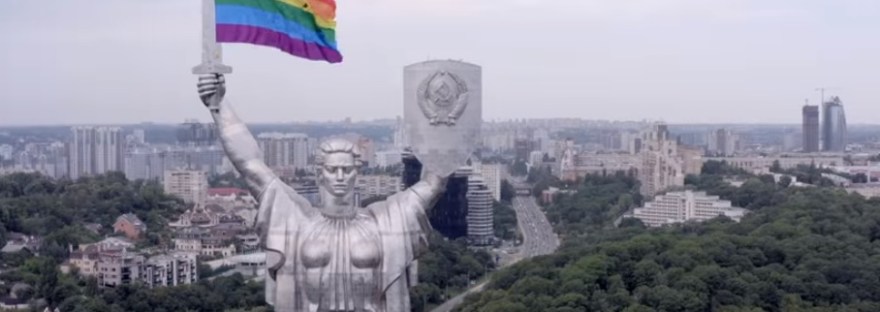
On June 21, 2020, a Ukrainian NGO KyivPride, that for several years already has been the main organizer of the Pride week and Equality march in Kyiv, posted a video in which a drone carrying a large rainbow flag flew over various districts of the Ukrainian capital. The flag ended up placed on top of the Motherland Monument, a Soviet-era war memorial in Kyiv. The monument is a large steel statue of a symbolic mother holding a sword and shield. The drone flew in front of the sword so that on the video, it looked as if the mother was waving a flag.

As in many places across the world, Pride month in Ukraine was moved to an online format forcing the organizing committee to be extremely creative. For more than a week, Ukrainian activists hosted zoom-conferences and interview marathons as Ukrainian cities were under strict COVID 19 lockdown. Despite screen fatigue, online events had quite decent attendance. As everybody was talking from the comfort of their own rooms and flats, it was the first time that none of the Pride Month events were disrupted by conservative right-wing groups’. The safety and accessibility of online meetings also allowed for the participation of people who could not make it previously due to health conditions or not being able to afford it. For example, a Ukraine-based NGO I am working with, Parents’ Initiative TERGO, for the first time in seven years of its existence hosted a series of online meetings of parents of LGBTQ people. Bringing together parents and activists from Ukraine, Russia, Belarus, Moldova, Kyrgyzstan, Latvia, and Lithuania. Of course, in theory, it could have been done before COVID, too. Still, it took a pandemic to push people to finally overcome their fear of technology and learn how to use online communication tools.

Read more

Feminist perspectives

On COVID 19 and commercial surrogacy in Ukraine

In 2013 I returned to Ukraine from Budapest, Hungary with an MA in Gender studies – not surprisingly it sounded strange to my friends and parents as it did not seem to make me very employable. A month of fruitless job searching made me desperate enough to pay an entrance ticket to a job fair in Kyiv, where I was given an actual newspaper full of job announcements – something I had completely forgotten about in the era of the Internet. Out of curiosity, I looked through it. I stumbled upon a two-pages full of ads promising USD 9 000,00 to women under thirty who already had at least one child and were ready to work as surrogate mothers (as a comparison, an average monthly salary in Ukraine was around 300-400 US Dollars at that time). That was when I found out that surrogacy was a legal practice in Ukraine. As the recent reaction of numerous Ukrainians in social media and on news forums demonstrated, this was news to them too, even though, for the past two decades, Ukraine had already been a popular destination for thousands of foreign couples unable to conceive a child.

Read more…