As Russia’s full-scale war against Ukraine continues its fourth year, recovery and reconstruction efforts have begun to take shape. Yet the vision guiding these efforts often overlooks the gendered realities of displacement, integration, and return. Despite repeated references to “equality” and “inclusion” in government strategies, policies remain largely disconnected from the lived experiences of women, LGBTQ+ people, and other marginalised groups, both within Ukraine and among the millions who fled abroad. The disconnect is not only a matter of policy design but also of political will, coordination, and recognition of who gets to participate in shaping Ukraine’s postwar future.
Author: marynashevtsova3525
Perspectiva feminista sobre la guerra de Rusia en Ucrania – entrevista con OrienteMedio
A las organizaciones feministas ucranianas no les faltan temas que abordar, empezando por la pobreza feminizada, destrucción de hospitales, escuelas y guarderías, desplazamientos forzosos, violencia de género (incluidas las violaciones en tiempos de guerra) hasta los derechos de las mujeres en el ejército – de esto y muchas cosas mas, incluso mi ultimo libro, en la entrevista al OrienteMedio
Policy Brief. Queering Displacement: The State of the Ukrainian LGBTQ+ Community During the Russian Full-Scale Invasion (For GPPI)

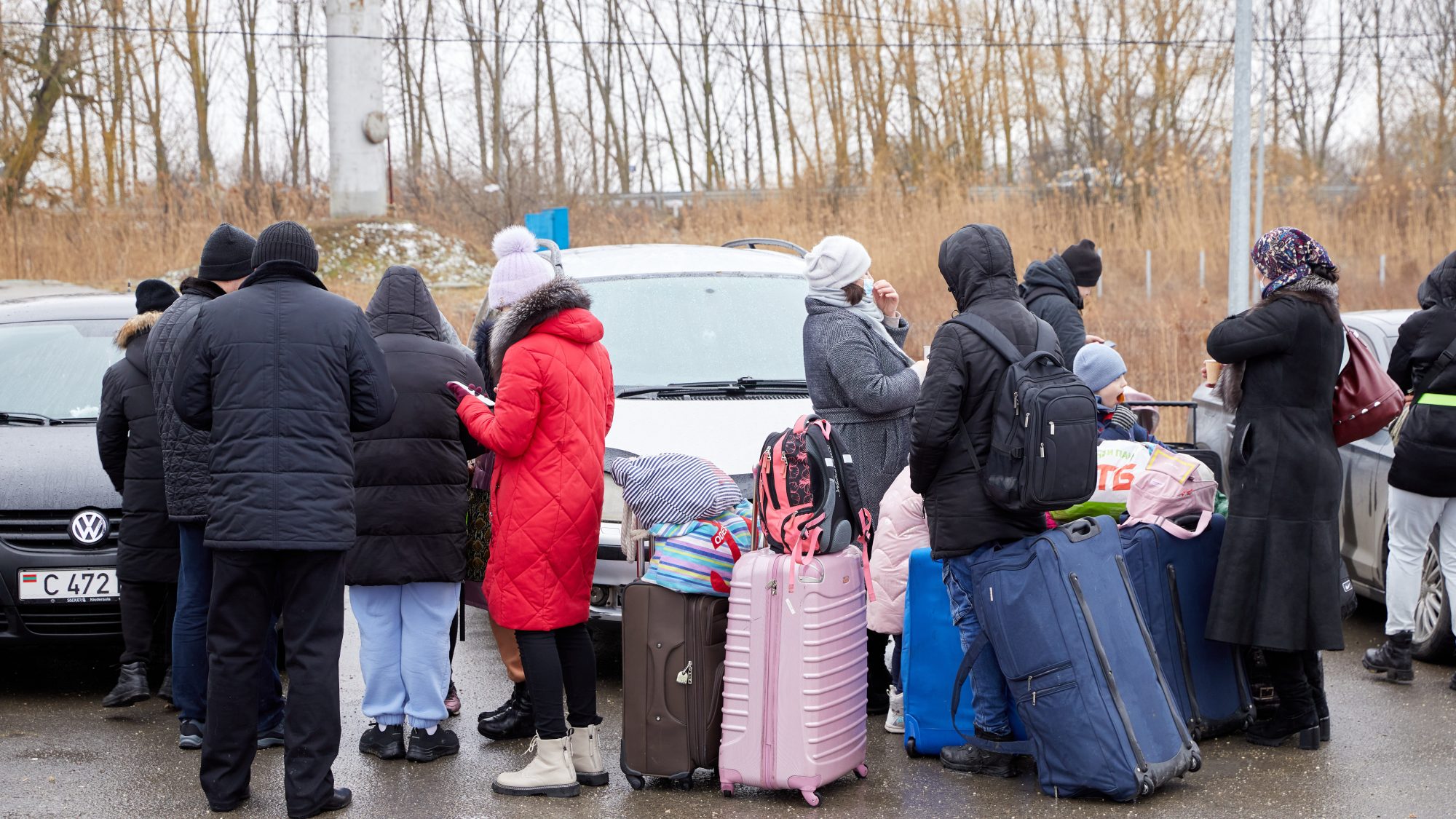
A scene from the Palanca-Maiaki-Udobnoe border crossing point, between the Republic of Moldova and Ukraine, on March 1, 2022, as people fled Russia’s military offensive | Photo: UN Women/Aurel Obreja/Flickr; CC BY-NC-ND 2.0
Russia’s full-scale invasion of Ukraine has had a drastic impact on the lives of internally displaced people (IDPs). But one subgroup of these Ukrainians is particularly vulnerable: IDPs who identify as LGBTQ+. I prepared the following brief in English and Ukrainian for the Global Public Policy Institute.
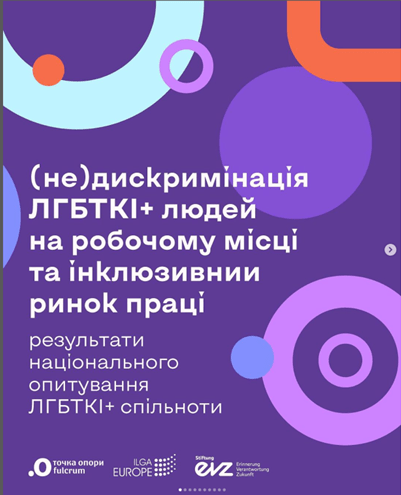
(non)discrimination of LGBTQI+ people in the workplace and inclusive labor market
(non)discrimination of LGBTQI+ people in the workplace and inclusive labor market results of a national survey of the LGBTQI+ community

In 2015, the Verkhovna Rada of Ukraine voted for the amendment to the
Labor Code of Ukraine that prohibited discrimination of people in the
workplace based on their sexual orientation and/or gender identity. By
2023, there was not a single case in Ukraine submitted to the court in
relation to workplace discrimination based on SOGI. At the same time,
although recent sociological data shows a general improvement in
societal attitudes toward LGBTQ people , LGBTQ people remain one of
the most marginalized minority groups in Ukraine, and the full-scale
invasion has exacerbated their vulnerability. Based on this premise and
on the fact that there has been no research, and no data was collected
on LGBTQ people in the Ukrainian job market. Therefore, the present
report is the first attempt to shed some light on the situation of
Ukrainian LGBTQ people in various sectors of economy. The purpose of
the report was to highlight the main challenges and obstacles that
Ukrainian LGBTQ individuals face in job searches and workplaces.
Designed as a qualitative study and primarily based on in-depth one-toone interviews with LGBTQ Ukrainians, the report has its limitations in
terms of representativeness of the sampling regarding participants’age,
place of residency, and employment sector. Nevertheless, it can serve as
a solid starting point and give a good idea of the issues that need to be
dealt with to make Ukrainian private and public sectors of economy
more inclusive.
LGBTQI+ Refugees from Ukraine in EU countries: Challenges and Needs – June 2023, for Gender Stream

photo by Olha Poliakova, Gender Stream NGO
About the challenges and problems, the experience of crossing the border, integration and socialization in new conditions and the desire to return to Ukraine — Maryna Shevtsova on the request of the public organization “Gender Stream” and with the generous support of FLAX Foundation conducted the world’s first study of the situation of LGBTQI+ Ukrainians abroad.
According to the results of the study, the main problems of LGBTQI+ refugees in host countries are related to:
- Searching for affordable and safe housing
- Access to friendly medical care
- A language barrier that prevents access to the labor market or limits opportunities for employment and socialization.
SEE THE SHORT VERSION OF THE RESEARCH
The research was conducted using in-depth offline and online interviews from December 2022 to May 2023. 34 participants who at the time of the study lived in Austria, Bulgaria, the Czech Republic, Germany, Poland, Romania and Slovakia took part in the survey.
The main researcher was Maryna Shevtsova, candidate of economic sciences, PhD in political science. The study was prepared by the NGO “GENDER STREAM” on the initiative, as well as technical and organizational support of LabLGBTQI_UA and with the financial support of VOICE.
Interview questions covered the following areas:
- Choice of destination country
- Border crossing experience
- Search for housing and work
- Experience of integration and language courses
- Experience working with medical and social services.
Additional attention was paid to socialization, general psychological well-being and connections with local public organizations protecting the rights of LGBTQI+. At the end of the interview, respondents were asked about their future and improvements important for a possible return to Ukraine.
The LGBTQI+ community may experience additional, unique challenges and threats during full-scale war. Studying their experience allows us to identify special needs and problems faced by Ukrainian resettled women and men during relocation and seeking shelter in other countries. In the long run, this will allow for the development of more effective mechanisms for the protection and support of these people in their new places of residence. As a result, it will contribute to the creation of a more empathetic society, reduce stigmatization and discrimination of the LGBTQI community and ensure safety, protection and equal opportunities for its members.
LUCHA DE GÉNERO Y EUROPEÍSMO: EL CASO DE TURQUÍA Y UCRANIA
Interview with Informe Oriente Medio (in Spanish)
Oriente Medio News.- Muchas gracias, Maryna, por hablar con nosotros. Para comenzar la entrevista, nos gustaría saber un poco sobre su biografía y trayectoria académica.
Maryna Shevtsova.- Nací y crecí en Ucrania, donde obtuve mi primera educación en relaciones económicas internacionales y trabajé durante varios años como profesora universitaria. En 2012, decidí cambiar el campo y solicité un programa de maestría en estudios de género en la Universidad Centroeuropea, entonces con sede en Budapest, Hungría (ahora, debido al régimen de Orban, tuvieron que mudarse a Viena, Austria).
Durante mi maestría, me interesé en los estudios de movimientos sociales y activismo de la sociedad civil. Tuve la suerte de conseguir otra beca para hacer estudios de doctorado sobre estos temas en la Universidad Humboldt, Berlín, y así es como comenzó mi carrera académica. Tuve estancias de investigación en la Universidad de Lund, Suecia, la Universidad de Ljubljana, Eslovenia, en la Universidad Técnica de Oriente Medio, Ankara, Turquía, la Universidad de Helsinki, Finlandia, y Pompeu Fabra, Barcelona, España.
El 1 de septiembre de 2023, comienzo mi nuevo puesto como Senior FWO Research Fellow en KU Leuven, Bélgica. Probablemente tenga que decir que dicha movilidad también está relacionada con la precariedad de mi estatus académico. Si bien disfruto viajar y me apasionan los diferentes países y culturas, no estar seguro de su nueva posición cada año o dos conlleva bastante estrés. También es «más fácil» cambiar de país para una persona sin cónyuge e hijos, como yo. Sin embargo, también se puede decir que tales estructuras en la academia occidental, de hecho, hacen que establecer una familia y tener hijos sea un desafío o, si uno decide hacerlo, limitar sus oportunidades de carrera (y más a menudo, esas son oportunidades de carrera limitadas para las mujeres).
Me parece importante enfatizar cosas como que desde afuera, en las redes sociales, para algunas personas, la vida académica puede parecer más glamorosa y emocionante de lo que es en realidad.
También me gustaría mencionar que durante los últimos seis o siete años, he estado tratando de sentarme en dos sillas, combinando la investigación académica con el trabajo con ONG y organizaciones internacionales, ya que creo que los científicos sociales pueden contribuir a cambiar el mundo que los rodea. Trabajé en diferentes roles como coordinadora de proyectos, investigadora y consultora con muchas ONG de derechos humanos en Ucrania y la región de Europa Central y Oriental. En 2021, organicé mi propia ONG en Dnipro, Equal Opportunities Platform – hablaré más sobre esto más adelante. Leer mas
The participation of LGBTQ+ people in the war effort cannot be ignored
Interview for the Forum for Ukrainian Studies
Ostap Kushnir: In your opinion, what major gender-based challenges in social and political life has Ukraine faced, resolved, or failed to resolve since the beginning of the war in 2014?
Maryna Shevstova: When it comes to legislation, Ukraine has been on the right path and demonstrated good progress. This has happened not without the help of its Western partners. Immediately after Euromaidan in 2014, Ukraine reoriented itself toward integration with the European Union, which was accompanied by technical, economical, financial, political, and other kinds of support from the outside. This also additionally empowered civil society, activists, and individual MPs to push forward for further updates.
One call or message can change someone’s destiny or give them hope
An interview with Ukrainian MSCA postdoctoral fellow Maryna Shevtsova.

An interview with MSCA Portal, full version available here
Do wars have a sexual orientation? On the Russian invasion, LGBTQ rights and civil society resistance in Ukraine
This piece, I wrote for Feministeerium, aims to prove the legitimacy of those concerns by offering a brief reflection on how this war affected the Ukrainian LGBTQ community.

Podcast: Resisting Russian propaganda: on nationalism in Ukraine
According to the Russian government, the goal of invading Ukraine was to “denazify” the country and its leadership and “to protect people” who have been “subjected to bullying and genocide». The trope of Ukraine «nazification» has been enormously highlighted and elaborated within the official Russian discourse since 2014. Since the Crimea annexation and the war in Donbass, the Russian state-linked mass media has been promoting discussions on the rise of nationalism and nationalistic movements in Ukraine portrayed as a threat to the Russian-speaking population of Ukraine.
The current podcast is aimed at dismantling the Russian propaganda’s trope of Ukraine «nazification». Postdoctoral researcher Anna Avdeeva (Swedish School of Social Science) discusses the nationalism in Ukraine, understood widely, together with the Ukrainian scholar Dr. Maryna Shevtsova, Postdoctoral researcher at University of Ljubljana (Slovenia), and Senior FWO Fellow at KU Leuven (Belgium). The podcast continues the series of the discussion on the war in Ukraine.